Every experienced developer knows that due diligence wins or loses a project long before the first planning application is lodged. Yet flood risk, one of the most common reasons for delayed approvals, redesigns, and cost blowouts , is routinely underestimated or left too late in the process.
This guide covers what to look for, what to ask, and what to expect when assessing flood risk at the earliest stages of a development. Whether you're evaluating a greenfield subdivision, an infill residential project, a commercial or industrial site, or a renewable energy development, getting preliminary flood advice early is one of the most cost-effective decisions you can make.
What is preliminary flood advice?
Preliminary flood advice, sometimes called a flood feasibility assessment, flood due diligence, desktop flood assessment or simply flood advice, is an early stage review of a site's flood risk before you commit to a purchase, a design, or a full flood impact assessment. It's designed to answer three fundamental questions:
Is this site affected by flooding?
How significantly? and,
What are the implications for what I want to build?
Unlike a full flood impact assessment (which involves detailed hydrological and hydraulic modelling, typically with RORB and TUFLOW, of the proposed development), preliminary advice is a desktop exercise. It draws on existing flood mapping, planning overlays, available flood studies, topographic data, aerial imagery, flow calculation estimates and engineering judgement to give you a clear picture of the flood constraints on the site, and whether the project is likely to be feasible from a flood perspective.
The output is usually a brief technical memo or letter that summarises the known flood risk, identifies potential constraints, flags any likely authority requirements, and recommends next steps. It's not a substitute for a full assessment, but it tells you whether the project has any red flags before you invest in detailed design and modelling.
Book a free 15-minute consultation
Why developers need flood advice at the feasibility stage
The cost of preliminary flood advice is typically a fraction of a full flood impact assessment. The cost of not getting it is potentially significantly higher.
Here's what we see regularly in practice. A developer purchases a site or commits to a design based on assumptions about flood risk that turn out to be wrong. By the time a flood engineer is engaged, the design is finalised, the planning application is lodged, and the referral authority, Melbourne Water, the CMA, or council, comes back with conditions or objections that require fundamental changes to the design. Floor levels need to be raised. Layouts need to be reconfigured. Fill volumes change. Retaining walls are added. Setbacks need to be increased. Stormwater systems are redesigned. In some cases, the yield that made the project viable is no longer achievable.
The financial impact of this scenario is significant. Redesign costs alone can run from $20,000 to $100,000+ depending on the scale and stage of the project. Holding costs during the delay; interest, rates, insurance, opportunity cost, compound on top adding further stress. And if the project requires re-notification of objectors or a fresh referral, the timeline can extend by six to twelve months or more.
Preliminary flood advice costs a fraction of that and takes a fraction of the time. It doesn't eliminate all risk, but it identifies the major constraints early enough to inform your purchase decision, your design brief, and your project feasibility assessment. Typically we would recommend requesting flood advice at a minimum a month prior to finalising your purchase.
What to check before you engage a flood engineer
Before requesting formal preliminary flood advice, there are several things you can check yourself to build an initial picture of a site's flood exposure. None of these replace professional advice, but they help you ask better questions and avoid obvious red flags.
Planning overlays and zones
Check the planning overlays on the site through VicPlan or your council's online planning portal. The three flood-related overlays to look for are the Special Building Overlay (SBO), which relates to urban stormwater flooding from overland flow paths; the Land Subject to Inundation Overlay (LSIO), which relates to riverine flooding from waterways; and the Floodway Overlay (FO), which identifies land within the primary flow path of a waterway where development is heavily restricted. The only flood zone is Urban Floodway (UFZ) typically applies where the potential flood risk is high. Development is generally not encouraged in the UFZ.
A property with no flood overlay is not necessarily flood-free. Overlay mapping across Victoria is progressively being updated, and some areas have flood risks that haven't yet been captured in the planning scheme, Knox City Council and Whitehorse City Council as some of the locations. Conversely, a property with an overlay is not necessarily unbuildable, the extent and severity of the flood affectation matters more than the simple presence of an overlay.
Existing flood studies
Check whether there is a published flood study covering the area. Many councils and CMAs have completed detailed flood studies that provide modelled flood levels, depths, velocities, and mapping for the estimated 1% AEP (Annual Exceedance Probability) event and other design storms. Some of this information is publicly available through council websites, Melbourne Water's flood mapping portal, or the relevant CMA. If a flood study exists, a flood engineer can use it as the basis for preliminary advice, significantly reducing the time and cost compared to sites with no existing data.
Some examples are; Flood Eye from the North Central CMA, Flood Intelligence from the Goulburn Broken CMA, and Digital Twin for Victoria.
Topography and drainage
Look at the site's topography relative to nearby waterways, drainage infrastructure, and natural low points. Sites that sit lower than surrounding land, are adjacent to waterways or drainage reserves, or sit at the bottom of a catchment are more likely to have flood constraints. Google Earth, aerial imagery, and contour data can give you a useful initial picture.
Flood advice requests
For sites across Victoria, in the Melbourne Water, Goulburn Broken, Corangamite, North Central, Glenelg Hopkins, East Gippsland, West Gippsland, Mallee, North East, and Wimmera Catchment Management Authorities service area, you can request flood levels directly through their planning and development team. This gives you the estimated 1% AEP flood level at your site, which you can compare to your site's natural surface levels to understand the potential depth of flooding. This information is often available before you engage a flood engineer and can help you decide whether formal preliminary advice is warranted.
Council pre-application meetings
Many councils offer pre-application meetings where you can discuss a proposed development informally before lodging a planning application. These meetings can reveal whether council has specific flood concerns about the area, whether they'll require a flood impact assessment, and whether there are any known issues from previous applications on nearby sites. This is free intelligence that can save significant time later. It should be noted that some Councils do not engage internally with their Stormwater and Flooding Departments and it should be requested explicitly.
What a flood engineer assesses during preliminary advice
When you engage a flood engineer for preliminary flood advice, they'll typically assess the following.
Flood inundation
What is the flood level at the site during the estimated 1% AEP event? How does this compare to the natural surface levels across the site? What are the estimated flood depths, and do they vary significantly across the property? Is the flooding from riverine sources, urban stormwater, or both? Are there overland flow paths crossing the site?
Development implications
Based on the flood levels, what minimum floor levels would likely be required for habitable and non-habitable areas? Does the flood inundation constrain the developable area of the site? Will filling be required to raise the site above flood levels, and if so, how much? Could filling or building on the site redirect or worsen flooding on neighbouring properties? Are there velocity or depth-velocity product constraints that may affect building design or restrict development in parts of the site?
Authority requirements
Which referral authority will assess the application, Melbourne Water, a CMA, a Council or a mixture of two? What technical requirements and conditions are they likely to impose? Is a full flood impact assessment likely to be required, and what scope of modelling will be needed? Are there any known sensitivities in the area, for example, downstream properties with existing flood complaints, or a history of objections on nearby sites?
Feasibility assessment
Based on all of the above, is the proposed development likely to be feasible from a flood perspective? Can the site achieve the yield, layout, and built form the developer is targeting while meeting flood requirements? Are there fatal flaws, constraints so significant that the project is unlikely to be approvable in its current form?
These questions answered can save a developer hundreds of thousands of dollars in redesign and application costs.
Red flags to watch for
Through our experience across hundreds of projects, certain site characteristics consistently signal higher flood risk and greater complexity in the approval process. These aren't necessarily deal-breakers, but they warrant careful assessment before committing.
Sites within or adjacent to a Floodway Overlay. Floodways carry the bulk of flood flows during major events. Development within floodways is heavily restricted, and in many cases the referral authority will not support new buildings or significant works within the floodway extent. If the floodway covers a large portion of the site, achievable yield may be significantly reduced.
Sites requiring substantial fill. If the site needs to be raised significantly above natural surface level to achieve compliant floor levels, the fill itself can redirect flood flows and worsen flooding on neighbouring properties. This creates a modelling and approval challenge that adds cost and complexity. The volume and location of fill, and its impact on flood behaviour, will need to be carefully assessed. Many CMAs require a 1:1 cut and fill ratio to compensate for flood storage.
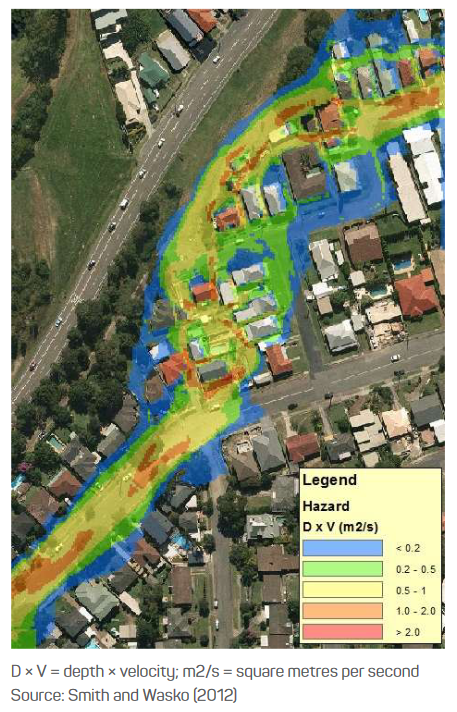
Sites with high-velocity overland flow paths. Not all flooding is equal. Shallow, slow-moving water across a site is generally manageable through design. Deep, fast-moving flows, particularly overland flow paths that concentrate between buildings, along reserve strips or roads pose safety risks and create more onerous design requirements. Hazard (depth-velocity) product limits may restrict what can be built in affected areas.
Sites downstream of known flood problem areas. If the area upstream of your site has a history of flooding, drainage complaints, or stormwater capacity issues, any development that changes runoff behaviour, even marginally, is likely to attract scrutiny from the referral authority and potentially from neighbours.
Sites with no existing flood data. If there's no published flood study covering the area and no existing flood levels available from Council, Melbourne Water or the CMA, the cost and timeframe for a flood assessment increase significantly. New hydrological and hydraulic modelling may need to be built from scratch, which can take months rather than weeks and costs considerably more than an assessment based on existing data.
Sites at the confluence of two waterways or drainage systems. These locations often experience complex flood behaviour where flows from different sources interact. Modelling is more complex, and the referral authority's assessment is typically more rigorous.
What preliminary flood advice typically costs
Costs vary depending on the complexity of the site, the availability of existing flood data, and the scope of the advice required. As a general guide for Victorian projects:
A desktop flood review for a straightforward residential lot with existing flood mapping and published flood levels typically ranges from $1,500 to $4,000. This covers a review of existing data, a preliminary assessment of flood inundation and development implications, and a brief technical memo.
A more detailed preliminary assessment for a larger site, such as a multi-lot subdivision, commercial development, or renewable energy project, where additional analysis is required, typically ranges from $4,000 to $10,000. This may include preliminary modelling, fill and floor level analysis, and a more detailed constraints assessment.
These figures are indicative and will vary depending on the specific circumstances of each project. They should be weighed against the cost of proceeding without advice, which, as outlined above, can be orders of magnitude higher if flood constraints are discovered after design and application costs have been committed.
These costs can be tied into full flood impact assessment if needed down the line.
When to get preliminary flood advice
The ideal timing for preliminary flood advice depends on the type of development.
Site acquisition and due diligence. Before purchasing a site, or during the due diligence period of a contract of sale. At this stage, preliminary advice can inform your purchase decision and your offer price. If significant flood constraints are identified, you can negotiate the price down, include special conditions in the contract, or walk away before committing.
Pre-design feasibility. Before briefing architects or designers. Understanding the flood constraints early allows the design team to work within those constraints from the outset, rather than designing something that needs to be fundamentally changed later. This is particularly important for sites where floor levels, fill requirements, or flow path setbacks will influence building footprints and layouts.
Pre-application planning. Before lodging a planning permit application. Even if you've already progressed design work, getting preliminary flood advice before lodgement can identify gaps in your application that would otherwise trigger a request for further information, adding weeks or months to the process.
The common thread is "before you commit." Whether that's committing to a purchase, a design, or an application, getting flood advice before that commitment point is when it delivers the most value.
How SWM Consulting can help
We provide preliminary flood advice for developers, builders, and project managers across Melbourne, and regional Victoria. Our typical process starts with a conversation about your site and your project objectives, followed by a desktop review of available flood data, overlays, and authority requirements, leading to a clear technical memo that tells you what you're dealing with and what to do next.
We engage with Melbourne Water, CMAs, and councils early, often before you lodge anything, to understand their expectations and reduce the risk of surprises during the formal assessment process. Our goal is to give you the information you need to make a confident decision about whether to proceed, and if so, how to structure the project to get approved efficiently.
If you're evaluating a site and want to understand the flood risk before you commit, get in touch. A 15-minute conversation is usually enough to tell you whether preliminary advice is warranted, and sometimes, that conversation is all you need.
Book a free 15-minute consultation
FAQs:
Question 1: What is preliminary flood advice?
Answer: Preliminary flood advice is an early-stage desktop review of a development site's flood risk. It draws on existing flood mapping, planning overlays, topographic data, and available flood studies to assess whether a site is affected by flooding, how significantly, and what the implications are for the proposed development, before you commit to a purchase, a design, or a full flood impact assessment.
Question 2: When should developers get preliminary flood advice?
Answer: Ideally during site acquisition due diligence, before briefing architects or designers, or before lodging a planning permit application. The earlier flood constraints are identified, the lower the cost of managing them. Getting advice after design is finalised or an application is lodged can result in costly redesigns and significant delays.
Question 3: How much does preliminary flood advice cost?
Answer: Costs vary depending on site complexity and available data. A desktop review for a straightforward residential lot typically ranges from $1,500 to $4,000. Larger sites such as subdivisions or commercial developments may range from $4,000 to $10,000. These costs should be weighed against the potential cost of proceeding without advice, which can be orders of magnitude higher. These costs can be tied into full flood impact assessment if needed down the line.
Question 4: What are the red flags for flood risk on a development site?
Answer: Key red flags include sites within or adjacent to a Floodway Overlay, sites requiring substantial fill to achieve compliant floor levels, sites with high-velocity overland flow paths, sites downstream of known flood problem areas, sites with no existing flood data, and sites at the confluence of two waterways or drainage systems.
Question 5: What is the difference between preliminary flood advice and a flood impact assessment?
Answer: Preliminary flood advice is a desktop review using existing data to assess site constraints and feasibility at an early stage. A flood impact assessment involves detailed hydrological and hydraulic modelling of the proposed development and is required for planning permit applications. Preliminary advice informs whether a full assessment is needed and what it will likely involve.